

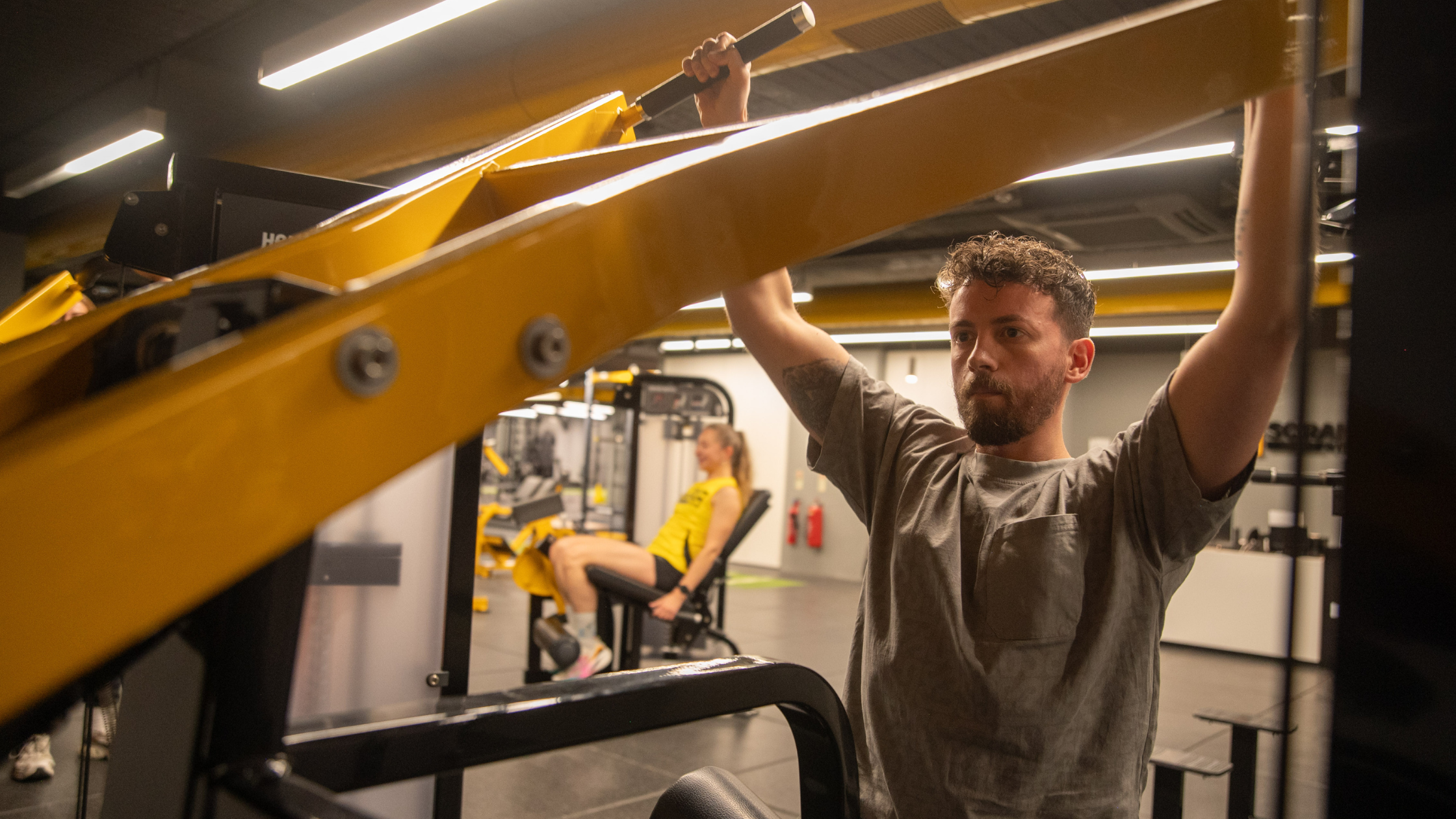
Whether you’re aiming to get stronger, build muscle, or improve performance, success in the gym comes from more than just showing up. Understanding and applying the five principles of fitness helps ensure your training is effective, efficient, and sustainable.
Let’s break them down — and meet Mike, a regular gym member who’s on a mission to get stronger.
1. Specificity
Train for your goal. Your body adapts to the specific type of training you do. If you
want to build strength, you need to lift heavy. If you want endurance, lighter weights
and higher reps make more sense.
Mike’s Example: Mike wants to increase his back squat. So, instead of spending all
his time on bicep curls or long cardio sessions, he focuses on squat variations,
heavy compound lifts, and leg accessories. He’s training with a purpose
specifically for strength.
2. Overload
To improve, you have to challenge your body beyond what it’s used to. That
could mean lifting heavier, doing more reps, or adding more sets gradually
increasing the demands on your muscles.
Mike’s Example: After a few weeks squatting 80kg for 3 sets of 5, Mike increases
the weight to 85kg. Then 90kg. Each time he lifts more than before, he’s applying
progressive overload, which forces his muscles to adapt. We overload to follow the
next principle.
3. Sufficiency
Training needs to be enough to trigger change, but not so much that it leads to
fatigue or injury. Recovery is part of the process.
Mike’s Example: Mike trains 4 times a week, focusing on compound lifts with
accessory work. He ensures sufficient volume and intensity to build strength but
he also prioritises sleep, nutrition, and rest days to recover properly. He’s not
overdoing it, and he’s not undertraining either.
4. Adaptability
Your body adapts to repeated stress — that’s progress. But if you do the same thing
for too long, plateaus happen. You need to keep challenging your system in new
ways.
Mike’s Example: After months of straight barbell squatting, Mike stalls. So he adds
in front squats, pause squats, and box squats to vary the stimulus. His strength
starts climbing again. Changing the challenge keeps him progressing.
5. Reversibility
Fitness is not permanent. If you stop training, your gains will decline. Staying
consistent is the key to long-term progress.
Mike’s Example: Mike goes on holiday for 3 weeks and doesn’t lift. When he
returns, his lifts are noticeably weaker. He learns that strength fades without stimulus
– but it’s also something he can rebuild with consistency. Remember that rushing
in too quick can lead to injury!
Final Thoughts
Whether you’re chasing a new PR or just trying to build a solid foundation, these five
principles will keep your training on track:
1. Specificity – Train for what you want
2. Overload – Keep pushing your limits
3. Sufficiency – Do enough, recover well
4. Adaptability – Mix it up to keep growing
5. Reversibility – Stay consistent or lose progress
When training with intention, results will follow.
Join us at SCRAM and remember to train like Mike.


